
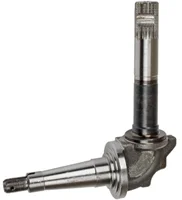
Description
When your Fordson Major starts wandering down the road or develops that unsettling wobble in the front end, chances are your spindles have seen better days. These classic British workhorses earned their reputation as reliable machines, but after decades of field work, mowing, and hauling, that right-hand spindle takes a beating from road crown and constant turning loads. This replacement gets your steering back to where it should be—solid and predictable.
Key Features
- Forged steel construction that starts as solid steel and gets precision machined where it counts most
- Bearing journals finished to exact surface requirements for years of smooth, reliable service
- Direct replacement design that restores proper steering geometry without modifications
- Heavy-duty vertical shaft design rated for the demanding loads these classics were built to handle
- Right-hand specific fitment for Major, Power Major, and Super Major tractors
Built for Real Farm Work
Fordson Major series tractors are classic British agricultural workhorses commonly used in mixed farming operations, estate work, restoration projects, and specialty agricultural applications. Whether you’re running a Major, Power Major, or Super Major, these tractors handle everything from cultivation to transport work, and that front axle sees plenty of action during headland turns and loader operations. This spindle handles the same work your tractor was designed for—day after day, season after season.
Made to Last
This spindle starts as a solid steel forging, then gets precision machined where it matters most. The bearing journals aren’t just smooth – they’re finished to the exact surface requirements that wheel bearings need for years of reliable service. This is the same quality construction that made these tractors last for generations.
Installation Notes
Installation requires about 2 hours per side if everything cooperates, and new bearings and seals are cheap insurance – a new spindle with old bearings is false economy. Proper bearing adjustment after assembly is critical: snug them up while rotating, then back off to the first cotter pin hole. Take your time with the bearing adjustment—it’s what keeps everything running smooth for the long haul.
Reviews
There are no reviews yet.